Power shared between neighbours: why we're backing mesh-grids in Nigeria
In many homes in the villages of Akwa Ibom State, Nigeria, evenings start with the sound of a petrol generator spluttering to life to create power and light for families. About three in four households surveyed rely on one, and while they do provide power, it’s at a high cost. The fuel is expensive, the fumes are unpleasant and harmful, they release large amounts of carbon dioxide, and when the petrol runs out, it’s lights out.
Since 2017, Energise Africa investors have been helping fund solar home systems, mini-grids, electric motorbikes and clean cookstoves in sub-Saharan Africa. Now, we are welcoming Renewvia to the platform, and they are doing something different: installing solar mesh-grids. Because they are something new, I wanted to take a few minutes to explain what they are, how they work and why I think they are so promising.
Too spread out for a mini-grid, too much for a single panel
The World Bank estimates around 600 million people in Africa still live without electricity. Most of them live in scattered rural communities, not dense towns.
Until now, those kinds of communities have had two main options.
A solar home system is a panel and battery for one home. They are brilliant for providing light and charging facilities to homes without power, and they are really quick and simple to install and run. However, they rarely make enough power to run a mill, a freezer or a welder.
A mini-grid is a small solar power station for a whole village, meaning it has one central solar plant and battery bank, with cables running out to every home. Mini-grids work well where homes are close together. But where houses are so far apart, the cables, poles and land make them expensive and slow to build.
Then you have a third option: mesh grids, and these are cleverly designed to combine the best of both.
How a mesh-grid works
The easiest way to describe it is that it’s power shared between neighbours. They consist of:
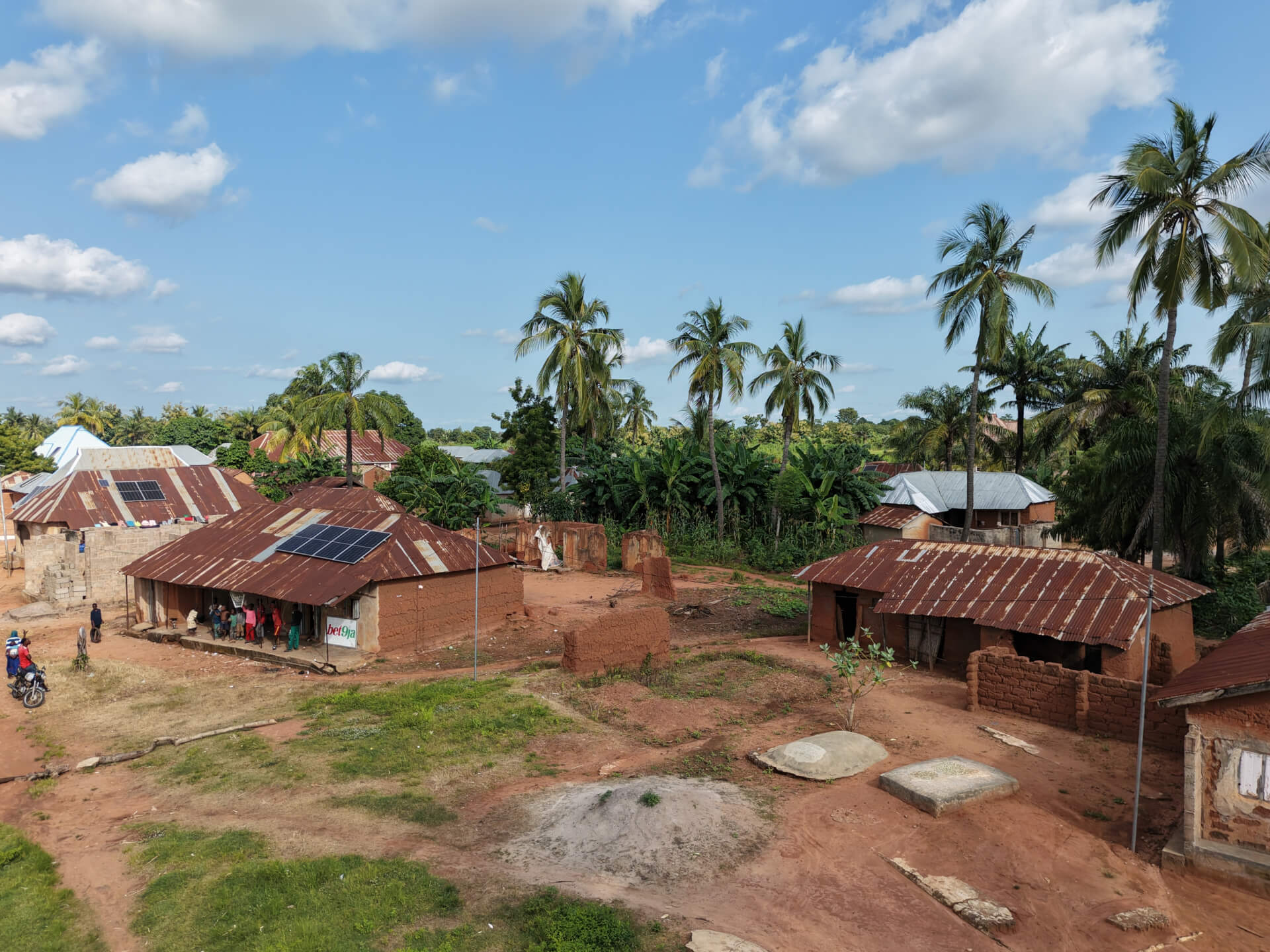
Hubs: Solar panels, batteries and a smart controller that are fitted on the roofs of the homes and businesses that use the most power. This could be a shop, a mill or a larger household. Each one generates and stores its own electricity.
Spokes: Neighbouring homes that need less power, often for lights, a fan, phone charging and a TV, are linked to a nearby hub by thin, low-voltage cable. They draw on the hub's spare power, so they don't need panels or batteries of their own. Around 80% of homes in a typical village are spokes.
A smart network: Hubs are linked to each other too, and send spare power to wherever it's needed. A small wireless network sends data to the cloud, so the operator can check performance and spot faults remotely. Customers pay as they go, topping up by mobile phone.
So with mesh grids, there is no central power station and the grid is built and expanded house by house, and the technology is installed on roofs people already own.
The benefits of mesh grids
This design has some fantastic benefits for rural off-grid communities and for the companies that run the grids:
- Lower cost. Because most power is used close to where it's made, mesh grids need far less heavy cabling. Okra, the company that makes the technology, says distribution costs can be up to 90% lower than a traditional mini-grid, and the cost of each connection is around 60% lower. That makes mini-grids an excellent option to connect off-grid villages affordably.
- Faster to build. Because there is no land to buy and no large plant to construct. A team can connect a village of around 250 homes in about 17 days.
- Safe to look after locally. The grid runs at 50 volts DC, which is safe to touch. Local people can be trained to install and maintain it, meaning that jobs and skills stay in the community.
- More reliable. There is no single point of failure on the grid, so if one unit has a problem, the rest of the grid keeps running.
They grow with the village. New homes can join, or if homes buy a freezer or open a shop, for example, they can be upgraded to a hub.
Introducing Renewvia
Renewvia has worked in Nigeria since 2016 and already powers close to 2,000 people in Akwa Ibom through an existing solar mini-grid. This bond will help pay for the Okra equipment, shipping and installation for mesh-grids in six communities: Ikot Oku Usung, Issiet, Mbiabong Ikot Mbiang, Mbiabong Ikot Udo, Use Abat and Ikot Edor.
Together, they will connect 2,120 homes and businesses, bringing clean electricity to around 10,000 people. They are expected to produce about 185 MWh of solar power a year, avoiding an estimated 159 tonnes of CO2. Every community will have its own trained Local Maintenance Agent. Installation is planned for February to April 2027, with all six grids due to be live by mid-2027.
For families, these connections will be life-changing, meaning light to study and cook by after dark, phones charged at home, cleaner, safer homes and less money spent on fuel. For business owners, it means connected machinery, longer trading hours and room to grow.
Investment backed by DARES
These projects are part of DARES (Distributed Access through Renewable Energy Scale-up), a USD 750 million programme funded by the World Bank and run by Nigeria's Rural Electrification Agency. It's one of the largest energy access programmes in the world.
DARES pays grants to approved developers like Renewvia once they have delivered results, in milestones. Each payment is released only after the Rural Electrification Agency has checked that the homes really are connected and using power.
The bond has been structured around those grant payments. Our investors' money pays for the equipment and installation up front, and repayment is expected to come from the DARES grant once delivery has been verified. That means repayment is linked to the grids being built and used, rather than relying on monthly payments from thousands of customers. Personally, I think that's a strong structure for a bond investment like this.
What I love about mesh grids is that it is based around a very human idea. It relies on neighbours sharing power, local people looking after it, and a network that can grow as the community does. Mesh grids are a smart, affordable way to connect the people who have been hardest to reach with clean and affordable power.
This is our first mesh-grid investment, and I am sure it won't be our last. If you'd like to help bring clean, reliable power to 10,000 people in Akwa Ibom, I hope you'll take a look at the new Renewvia bond.